01
Pick a topic
Choose one of the Chemistry topics above or type your own, then pick your state. WACE, VCE, HSC, QCE and SACE each word their questions differently, and the paper follows yours.
02
Attempt it yourself
Exam-style questions with the mark allocation showing, so you know how much to write. You answer them — nothing is handed to you.
In the Haber process, N₂(g) + 3H₂(g) ⇌ 2NH₃(g) is exothermic in the forward direction. Explain the effect of raising the temperature on the ammonia yield, on the equilibrium constant K, and on the rate of reaction. (6 marks)
03
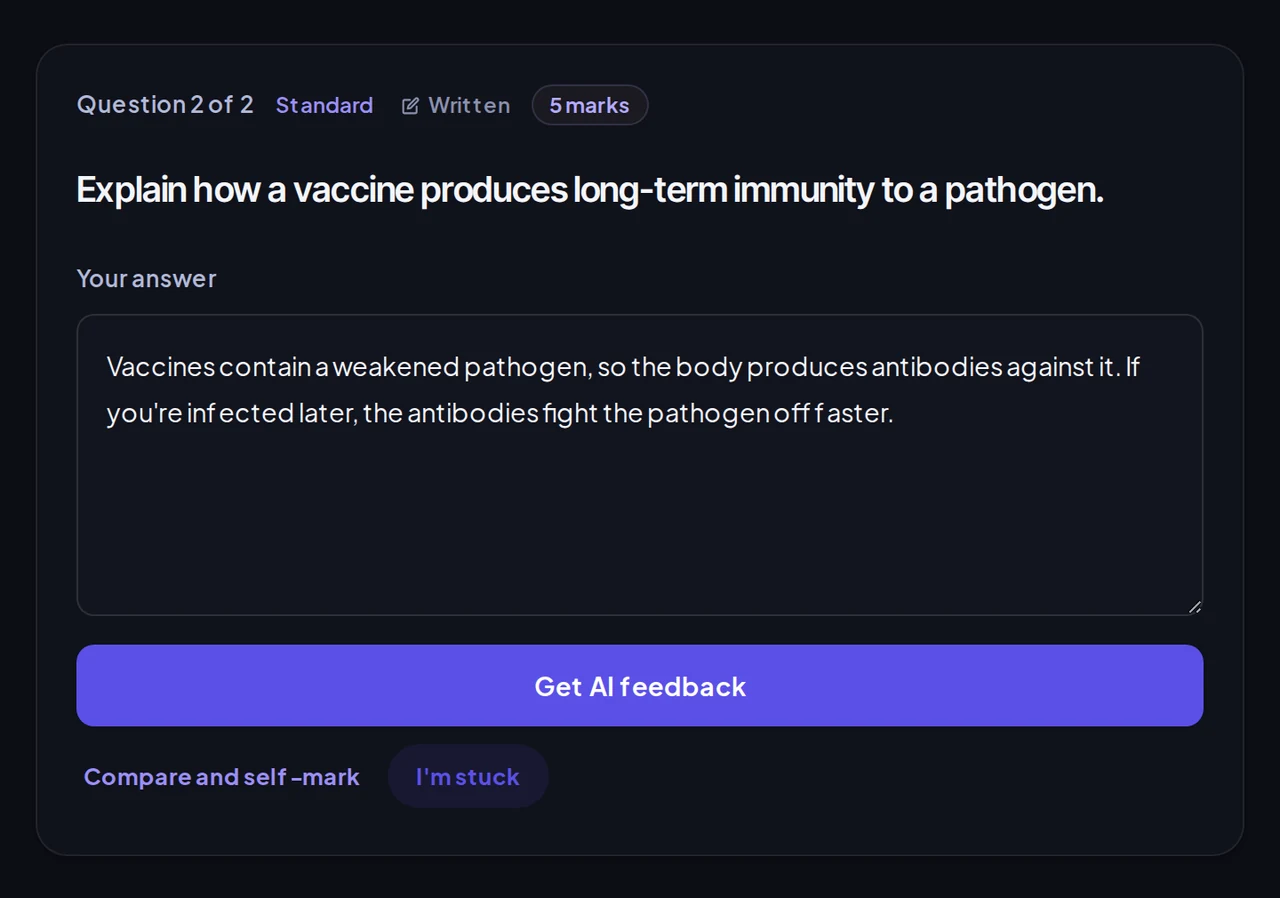
Get it marked
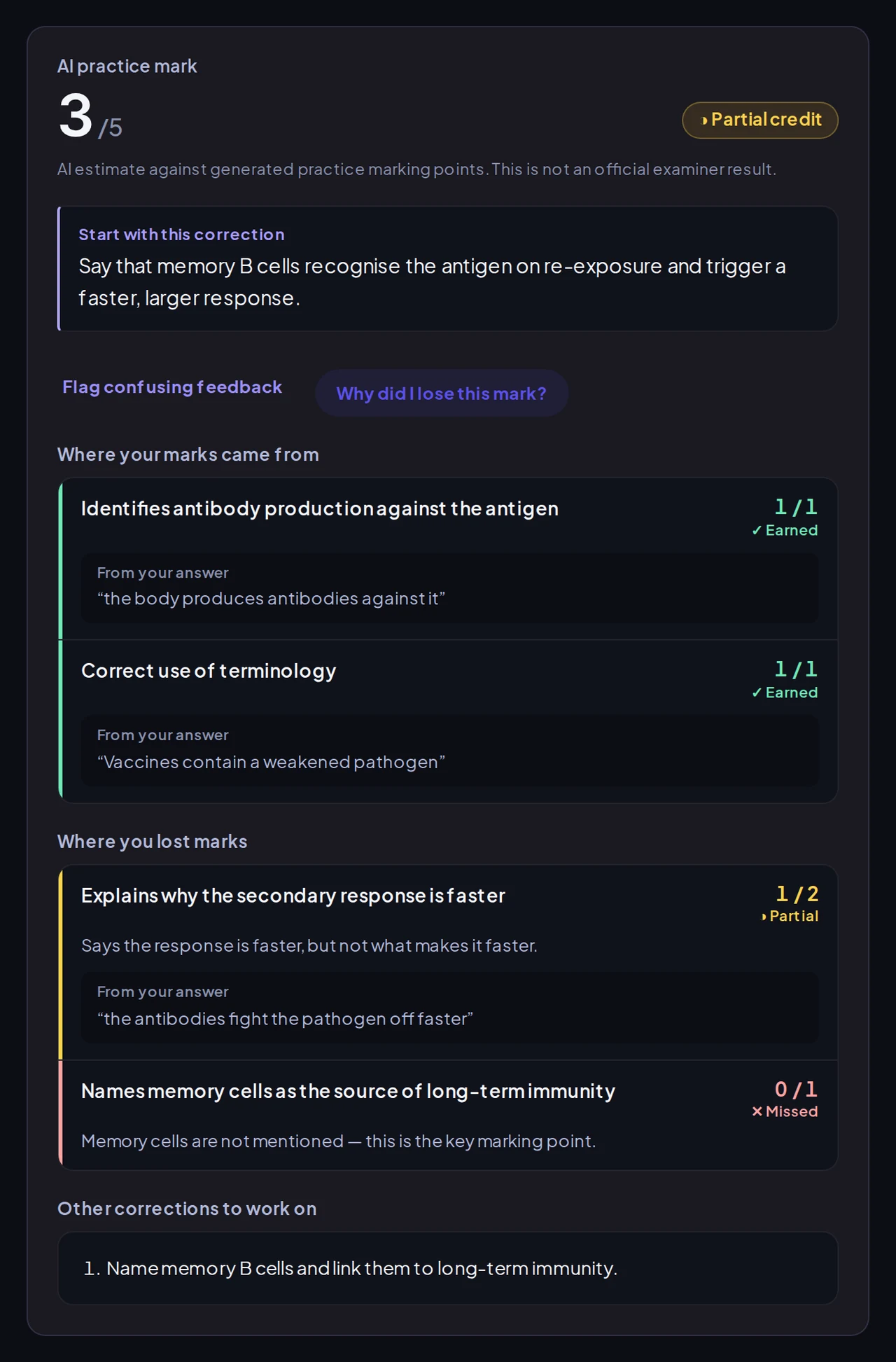
Your answer comes back marked criterion by criterion in seconds — what you earned, what you half-earned, and what the examiner never saw.
4/6 · ✓ Links the exothermic forward reaction to an endothermic reverse reaction
04
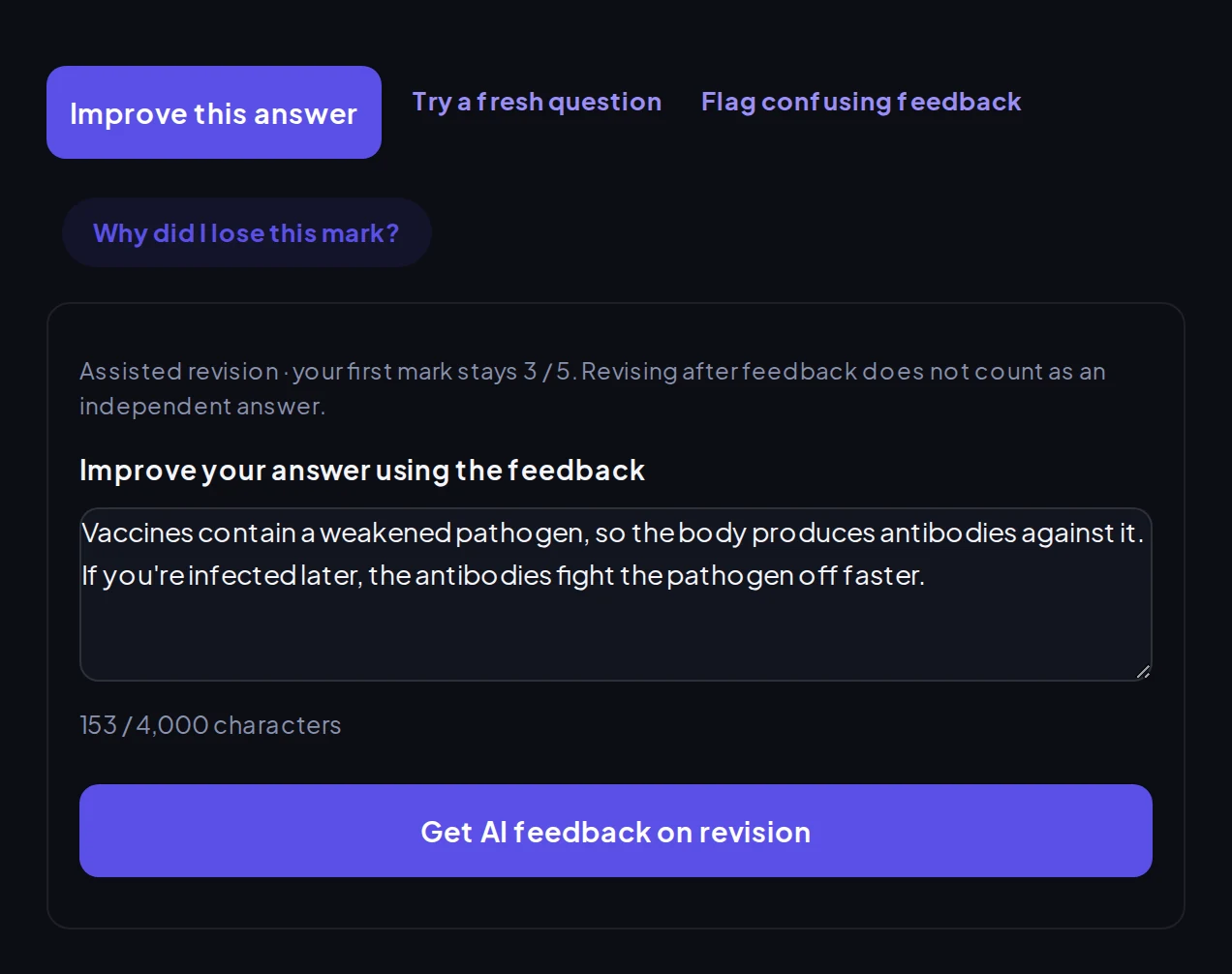
Fix the gap
The topics you keep losing marks on come back around in your review until they're strong. That's the whole point.
stoichiometry and limiting reagents
Choose your system
WACEVCEHSCQCESACE
Then your topic
stoichiometry and limiting reagentstitration calculations and indicatorsLe Chatelier and the equilibrium constantrates of reaction and collision theory
In the Haber process, N₂(g) + 3H₂(g) ⇌ 2NH₃(g) is exothermic in the forward direction. Explain the effect of raising the temperature on the ammonia yield, on the equilibrium constant K, and on the rate of reaction. (6 marks)
Chemistry · WACE
Marked in seconds
✓ Links the exothermic forward reaction to an endothermic reverse reaction
✓ States the equilibrium shifts left, lowering the ammonia yield
△ Attributes the faster rate to more collisions exceeding the activation energy
✕ States that the equilibrium constant K decreases at higher temperature
Weak topics, resurfacing
stoichiometry and limiting reagents
titration calculations and indicators
Le Chatelier and the equilibrium constant